The Weather
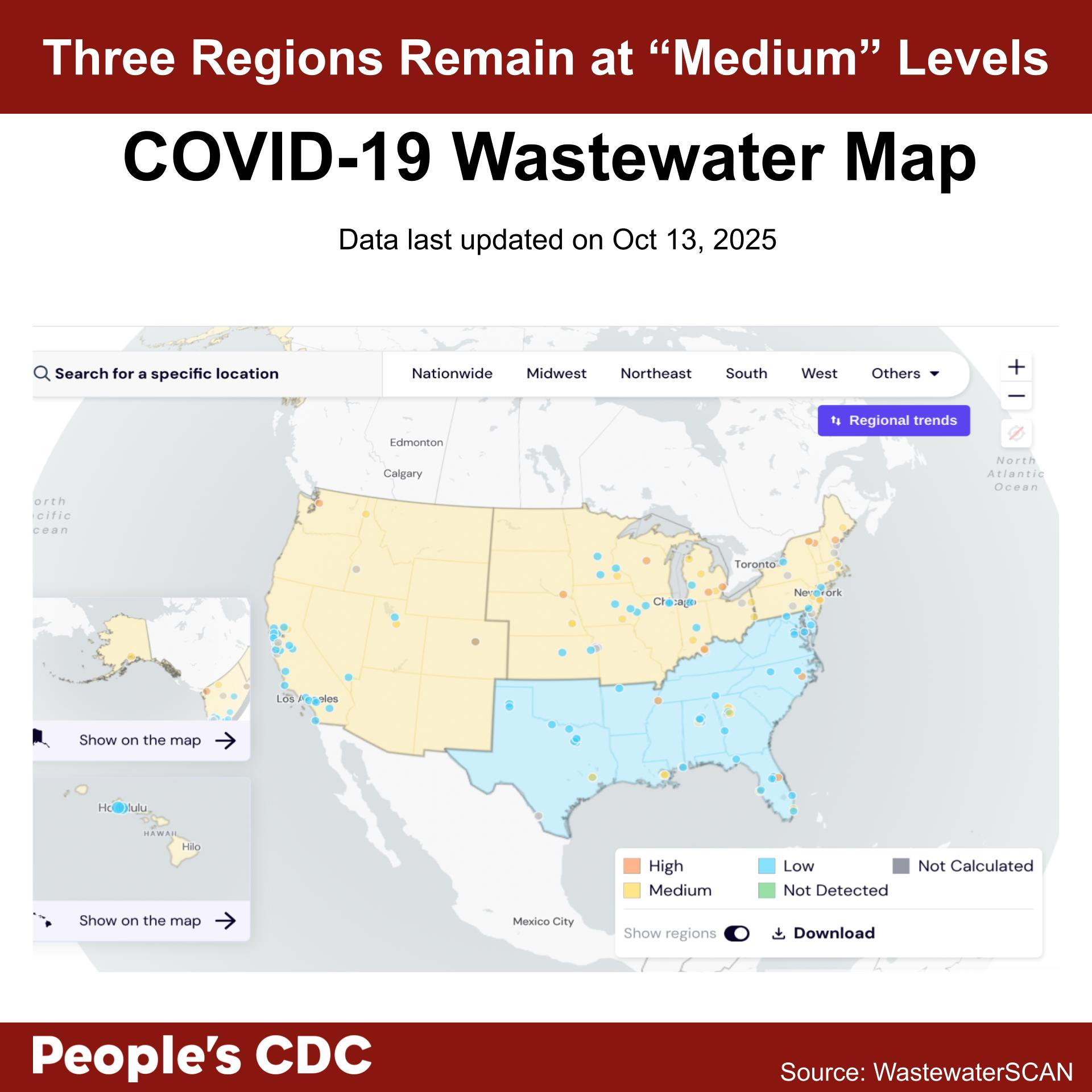
The CDC has not updated their wastewater map since September 25, 2025 as a result of the ongoing federal government shutdown. This may also have been caused by hundreds of CDC employees intentionally laid off by the Trump administration as they continue their ongoing attack on public health infrastructure. As a result, this week we will be reporting on COVID levels using data provided by WastewaterSCAN.
WastewaterSCAN reports COVID wastewater levels at the regional level with three major regions at “Medium” and one region at “Low.” These levels in the West, Midwest, and Northeast Regions demonstrate that there continues to be active levels of COVID transmission. As always, wear a high-quality respirator (e.g., N95, KN95) to minimize your risk of getting sick. If you have not done so already, it is important to get the updated 2025-2026 COVID booster.
Graphic source: WastewaterSCAN
Wastewater Trends
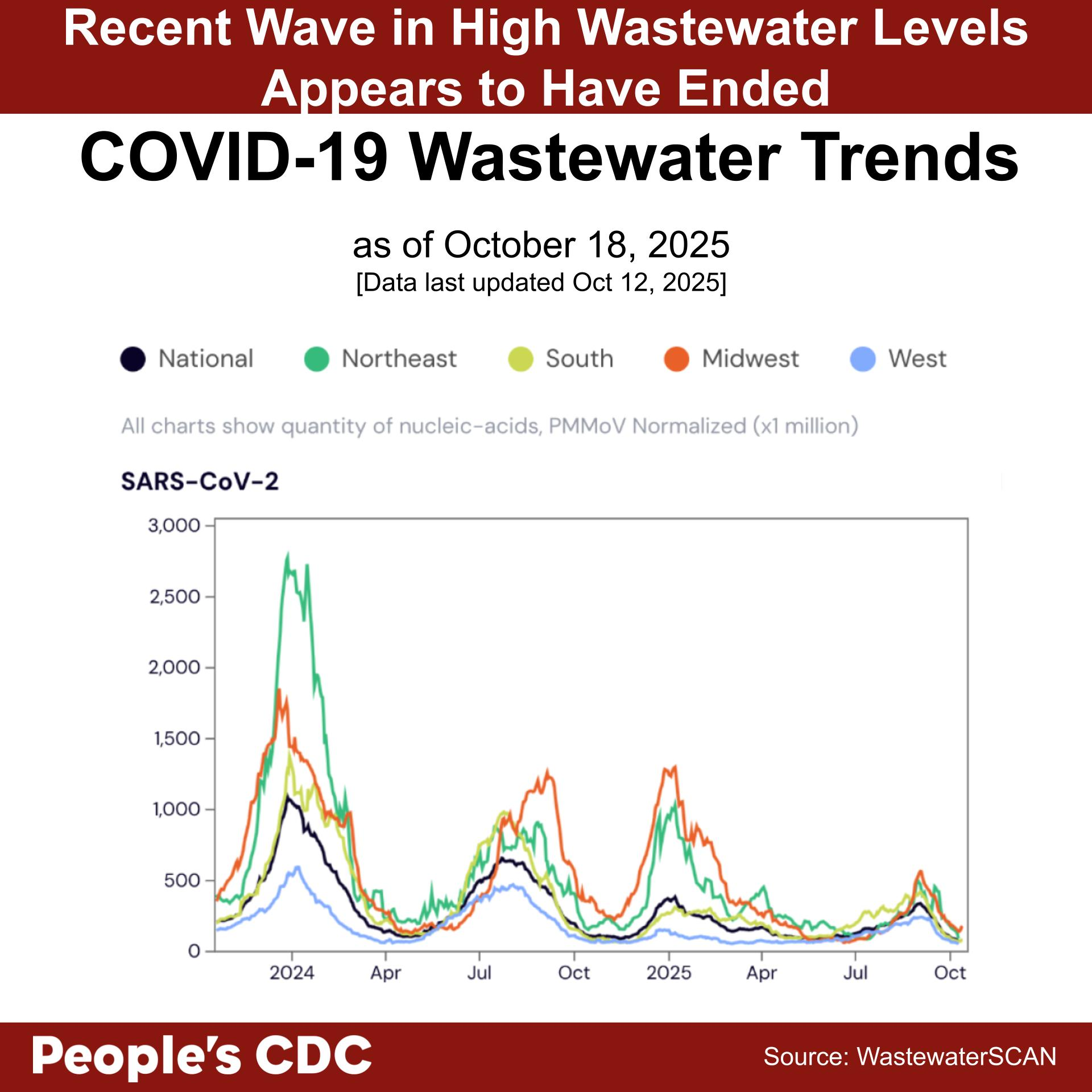
According to WastewaterSCAN, wastewater levels have decreased from a recent wave noting an overall downward trend, although recent reporting this week shows a slight uptick across the country.
Graphic source: WastewaterSCAN
Variants
The CDC’s variant tracking dashboard has not been recently updated. As a result, we will pause on the reporting of COVID variants until updated information is provided.
Other Public Health Threats:
As of October 1, 2025, the U.S. government remains shut down due to a negotiation breakdown over the national budget. Republicans in the Senate did not want to fund the tax credits for healthcare premiums under the Affordable Care Act. The potential budget cuts could more than double the cost of out-of-pocket premiums for the 24 million Americans who do not get their insurance through an employer or Medicare/Medicaid. Medicare telehealth coverage is also set to expire soon unless Congress secures funding for it. Contact your elected members of Congress in support of the resumption of government funding that ensures access to universal healthcare.
Mpox:
The Trump administration has also rescinded the policy that renamed mpox from ‘monkeypox’. Per the recommendations of the WHO, the name was changed to mpox in 2022 as an effort to reduce stigma, which had discouraged people from seeking preventative care and treatment. The name regression comes amidst an ongoing mpox outbreak in Chicago, where 104 cases have been documented from June 1 to September 30, 2025.
Long COVID:
A recent retrospective cohort study was published in the Lancet Infectious Diseases regarding children reporting that pediatric patients reinfected with COVID faced significantly higher risks of being diagnosed with Long COVID and other related conditions. Among those reinfected between January 2022 and October 2023, the risk of a Long COVID diagnosis doubled compared to those with a single infection. Even in the absence of an official Long COVID diagnosis, reinfection was associated with a higher risk for related conditions such as POTS, myocarditis, chest pain, fatigue, dizziness, and more. The study demonstrated how Long COVID can manifest differently in the pediatric population, often with more nonspecific symptoms such as mood changes, fatigue, and abdominal pain. Children remain an overlooked and understudied population in Long COVID research.
A retrospective cohort study regarding adults published in PLOS Medicine reported that adult patients with COVID infections occurring between September 2022 and December 2023 compared to the flu had a higher risk of severe Long COVID conditions requiring hospitalization. They also found that severe Long COVID conditions were reduced if patients received antiviral treatment, had up-to-date vaccinations before infection, or did not require inpatient admission for acute-phase illness.
Take Action
Healthcare settings must be safe from COVID infections. However, healthcare settings may stop reporting COVID exposures and infections because of a proposal by OSHA in the Federal Register to remove mandatory reporting even though the Occupational Safety and Health Administration (OSHA) on occasion require reporting of COVID exposures and infections in healthcare settings! The last day to ask OSHA to maintain their current reporting of COVID in healthcare settings is November 1, 2025.. Our focus is on ensuring healthcare-acquired COVID infections are reported and prevented. Comment via the Federal Register in support of reporting COVID exposures and infections in healthcare—deadline: November 1, 2025 at 11:59 pm EST. We will send additional instructions in a few days.
Notes: 1) The numbers in this report were current as of [10/20/2025]. 2) Check out the links throughout & see our website for more at https://peoplescdc.org. 3) Subscribe to our newsletter: People’s CDC | Substack.