
The Weather
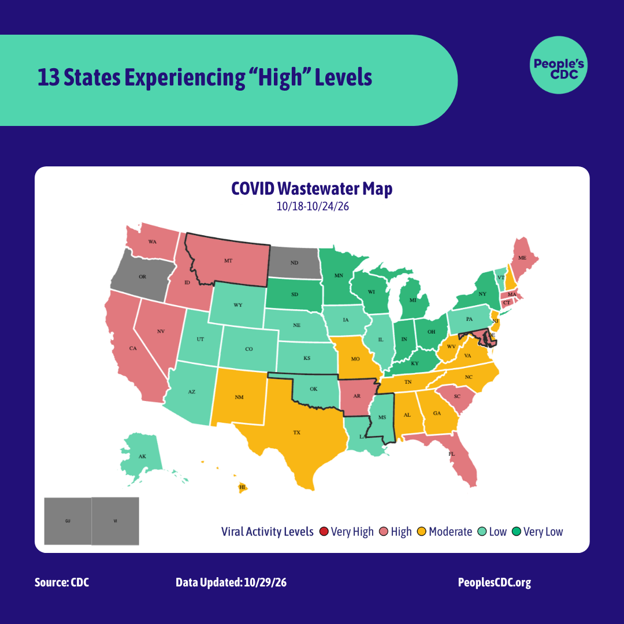
The CDC-based wastewater map was updated on October 29 and depicts wastewater levels for the period from October 18 through October 24.
According to the CDC’s COVID Wastewater Viral Activity map, Washington, California, Nevada, Montana, Idaho, Arkansas, Florida, South Carolina, Maryland, Connecticut, Rhode Island, Massachusetts, and Maine are experiencing “High” levels. 13 states are experiencing “Moderate” levels, 14 states and Washington D.C. are experiencing “Low” levels and 8 states are experiencing “Very Low” levels.
Arkansas, Maryland, Oklahoma, Montana, and Mississippi are experiencing “Limited Coverage,” meaning that the data is based on less than 5% of the population and may not be accurate for the entire state. Oregon, North Dakota, Guam, and the U.S. Virgin Islands are reporting “Limited/No Data.”
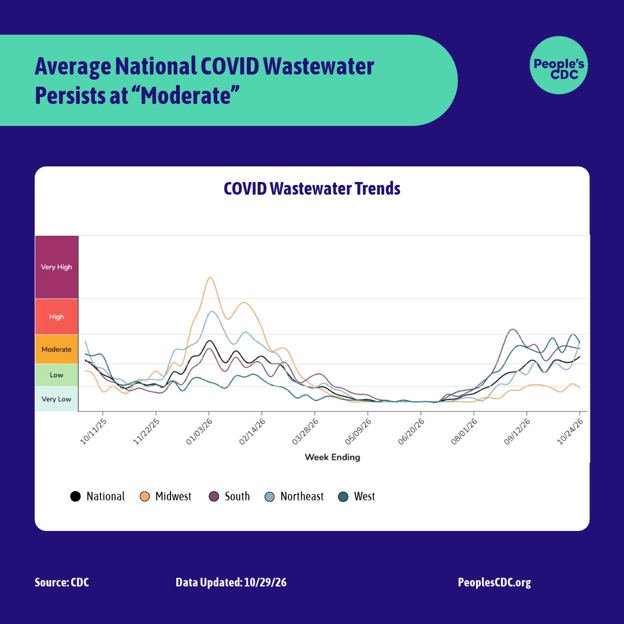
Regional trend data from the CDC indicate “moderate” levels persisting on a national level with the Northeast experiencing a sharp increase. The Midwest is hovering around the line dividing “low” and “very low” levels.
As a reminder, these categories should not be thought of as corresponding to any person’s risk of catching COVID. Remember other scientists can look at similar data and, using different systems, come to alternate conclusions. At Wastewater SCAN, for example, the team has determined all regions to be in the “high” category.
Start Planning for Holiday Gatherings
Fall and Winter holiday season is upon us! With this comes many opportunities to see loved ones and spend quality time together. However, the lower temperatures often mean crowding closer together indoors, creating ripe opportunities for disease transmission. Now is a great time to start strategizing how to make your gatherings safer. Check out our Safer Gatherings Toolkit and begin talking with your loved ones about a plan for testing, masking, vaccination, ventilation, and more to make your holidays safer and more accessible for everyone.
Take Action!
Reject Nicole Saphier for Surgeon General!
Call your senators and ask them to oppose Nicole Saphier in the senate-wide floor vote for Surgeon General. In September she advanced in the process in a close vote of 12-11 of the Senate’s HELP (Health, Education, Labor, and Pensions) committee but she will now need the approval of the entire senate in order to be confirmed. She is transphobic and has expressed flip-flopping views on vaccine efficiency. She quite literally wrote the book on MAHA with her 2020 title Make America Healthy Again: How Bad Behavior and Big Government Caused a Trillion-Dollar Crisis, a book which puts the blame on the American individuals’ behaviors, such as eating, drinking alcohol, and sitting rather than on ultra-expensive health insurance, high cost of living, and corporate pollution for the prevalence of cardiovascular disease and cancer. The book’s description on Harper Collins reads “If Americans want to know why their health care is so costly and getting costlier they need only look in the mirror. […] We don’t need socialized medicine—we need to take better care of ourselves.” Notably, as a remedy for Americans “[not] tak[ing] care of [them]selves,” Saphier has created a dietary supplement company called DropRX which last year reported $270,605 in revenue. Both she and her husband also invest in large tobacco companies. Senators must reject this Surgeon General who blames Americans for being unwell in order to profit from them.
Organize in Your Community and Make Our Next Wins Section!
Talk to your friends and the people that you interact with every day about organizing. Ask the other parents at your kid’s school if they want to have a few meetings with administrators to talk about improving air quality. See if your colleagues want to join a call to speak with your union representatives about pushing for reinstating additional paid sick days for folks with COVID and a testing-based approach to returning to work. Coordinate a masked karaoke event for your tenants association. Write to us about what you’re working on, so we can celebrate you in our next “wins” section!